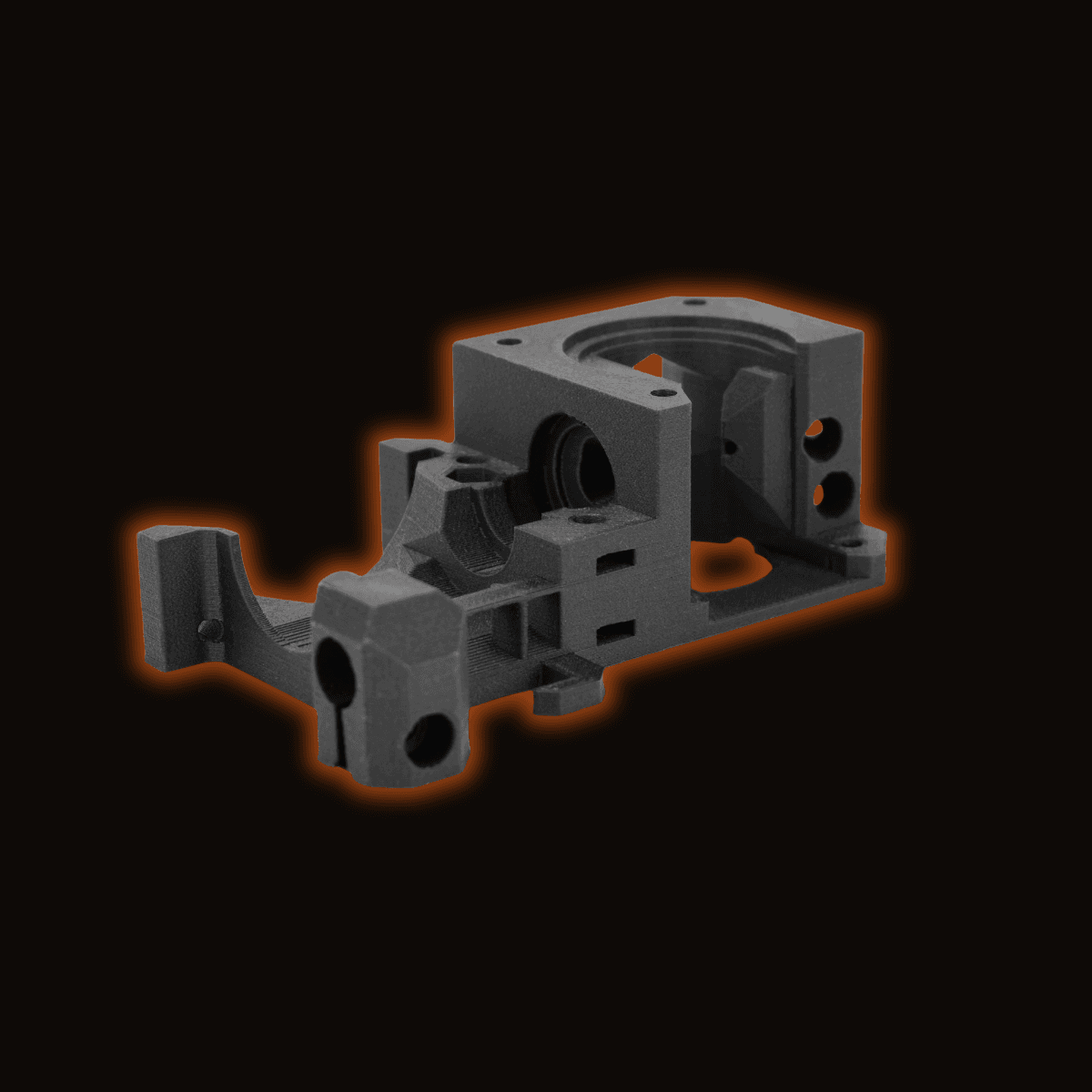
PETG
Glycol-modified copolyester
Cheap, forgiving on the printer, and resists water and most chemicals. Best up to about 65 °C.
PETG is a copolyester modified to resist crystallization. That makes it forgiving on the build plate: low warping, strong layer-to-layer adhesion, and good resistance to water and most chemicals. It's also cheap and ductile, which is why it's our default for large prints and fluid-handling parts.
The surface finish is semi-gloss with visible layer lines. Sanding works fine. Acetone vapor smoothing doesn't — PETG resists acetone, which is part of why we use it for chemical-handling parts. Cyanoacrylates and two-part epoxies bond well; solvent welding doesn't work.
Specifications
- Heat deflection (0.45 MPa)
- 70 °C
- Tensile strength
- 48 MPa
- Density
- 1.27 g/cm³
- Water absorption (24h)
- < 0.2%
- Price tier
- $
When to use
Parts up to about 65 °C, especially when they'll see moisture or chemicals, or when the geometry is large. Containers, enclosures, brackets, fluid-handling parts, and large-format prototypes that have to come off the build plate without warping.
When not to use
PETG softens above about 65 °C, so it isn't a fit for parts that operate in heat. Sustained UV exposure yellows and weakens it over time, so long-term outdoor use is out. It's also relatively ductile — bends under load before it breaks — which works against parts that need to hold tight tolerances under stress.
Where this material fits
Functional prototypes
FDM functional prototypes in engineering plastics. Verify form, fit, and function in days, not weeks.
Replacement parts
Discontinued OEM parts, vintage knobs, and out-of-production plastics printed in engineering-grade materials.
Short-run manufacturing
Low-volume FDM production, 10 to a few hundred parts, in engineering plastics — without mold tooling.